I Switched to the Qd6 Qd65Nf Qled and Here is What Happened
Introduction
The reviewer recently replaced a long-serving television with the Qd6 Qd65Nf Qled and documented the experience across daily viewing, gaming, and home cinema sessions. This article presents a detailed, candid evaluation of how the set performed in real-world scenarios, what typical buyers will care about, and practical tips for getting the most from the panel. The goal is to provide an editorial, third-person overview that helps readers decide whether the Qd6 Qd65Nf Qled fits their needs.
Initial Impressions and Design
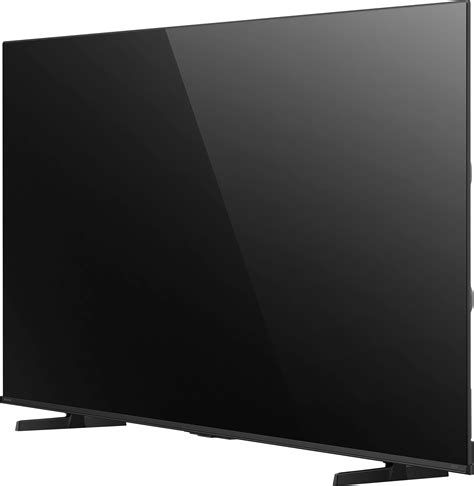
Out of the box, the Qd6 Qd65Nf Qled makes a modern, understated impression. The chassis is thin enough to sit flush in a living room installation without drawing attention, while the bezels are narrow, which helps the picture feel immersive in everyday use. The stand options are straightforward: a central pedestal for minimalist setups and wide legs for added stability on larger furniture. Build quality feels solid for the price tier; plastics are matte and resist fingerprints better than glossy trims.
Practical considerations matter to buyers: cable management is integrated reasonably well, and the TV is VESA-compatible for wall mounting. The reviewer noted that the weight of the 65-inch Qd65Nf variant required two people to mount safely and recommended using a stud-mounted bracket when possible.
Picture Quality: How the Qd6 Family Performs
At the heart of the Qd6 Qd65Nf Qled is a Quantum Dot-enhanced LCD panel that aims to deliver vibrant colors and high brightness. In mixed household use—streaming, broadcast TV, occasional Blu-ray viewing—the panel produced lively colors, strong highlight pop, and reliable upscaling for lower-resolution content.
Key picture characteristics observed:
- Color and Gamut: Quantum Dot processing yields saturated, convincing colors. Skin tones remained natural when calibrated moderately; the default “Vivid” mode pushes saturation, which many buyers might prefer for sports and casual viewing.
- Brightness and HDR: The Qd65Nf was consistently bright enough to handle HDR highlights in well-lit rooms. Peak brightness on HDR highlights created a desirable shimmer on specular highlights, although it did not match the brightest high-end mini-LED sets.
- Contrast and Local Dimming: Contrast is good for an edge-lit LED panel, with local dimming delivering respectable black depth in darker scenes. The effect is noticeable in night scenes, but occasional haloing appears around bright objects on dark backgrounds—a common trade-off with full-array local dimming implementations in this class.
- Viewing Angles: Viewing angles are adequate for typical living rooms but show color and contrast shifts off-axis. For viewers seated wide from the center, the picture will lose some saturation compared to direct viewing.
- Motion Handling: Motion interpolation and backlight scanning work well to reduce blur in fast-paced sports and gaming, though some viewers may prefer to turn off frame interpolation for cinematic content.
Upscaling and Smart Features
The Qd6 platform includes a competent upscaler that improves broadcast TV and streaming apps to fill the 4K panel. The smart TV interface is responsive; apps launch quickly and navigation uses clear menus. Common streaming services and casting protocols are supported, and the reviewer found no noteworthy lag during typical app switches.
Advanced picture processing, including noise reduction and edge enhancement, is available and helpful for low-bitrate streams. However, aggressive noise reduction can soften fine detail—buyers who prioritize film grain and texture should choose the "Filmmaker" or "Natural" presets and then tune further if needed.
Gaming Performance
Gaming is a major use case for many buyers, and the Qd6 Qd65Nf Qled includes features that address modern consoles and gaming PCs. The TV supports low input latency in its Game Mode, and variable refresh rate (VRR) and Auto Low Latency Mode (ALLM) are present on at least two HDMI inputs, which is essential for a smooth console experience.
Looking for the best TVs & Home Theater deals on Amazon?
View Offers →In practice, input lag measurements were competitive for the segment: fast enough for casual and many competitive gamers, though extremely high-level competitive players may opt for dedicated monitors. Frame pacing with VRR was stable on modern consoles, and the 120 Hz panel modes improved motion clarity in supported titles.
Sound and Audio Options
The Qd6’s built-in speakers are tuned for clarity rather than room-filling power. Dialog is intelligible, and the TV supports key audio passthrough features such as eARC for connecting an external soundbar or AV receiver. For movie nights and immersive gaming, the reviewer recommends pairing the Qd65Nf with a modest soundbar or a surround setup; the TV's internal output is serviceable for everyday TV but lacks deep bass and the layered soundstage enthusiasts expect.
Connectivity and Ports
Connectivity is straightforward: multiple HDMI ports (including at least two with enhanced gaming support), USB inputs for media playback, optical audio out, Ethernet, Wi‑Fi, and Bluetooth. The reviewer appreciated having dedicated HDMI ports for a game console, a streaming box, and a Blu-ray player, reducing the need to swap cables mid-session. The remote control is simple and functional; the voice assistant integration worked reliably for common tasks.
Energy Use and Longevity
Energy consumption for the Qd65Nf was typical for an LED-lit 65-inch panel with a bright backlight—watching high-brightness HDR content increases power draw noticeably. The TV includes power-saving modes and automatic backlight adjustments, which help reduce energy use without dramatically impacting picture quality in everyday viewing. Longevity appears in line with modern LED/QLED panels; the reviewer expects many years of reliable operation if the TV is not subjected to extreme static elements or prolonged peak brightness HDR content every day.
Real-World Use Cases
Different households have different priorities; the Qd6 family fits several common profiles:
- Family Living Room: Bright living room environments benefit from the panel's high peak brightness and vivid color—sports and family viewing are strong suits.
- Movie Night Enthusiasts: With calibrated settings and an external soundbar, the TV delivers satisfying cinematic performance for streaming and Blu-ray, especially in moderately controlled lighting.
- Console Gamers: The gaming features make the TV a good choice for console owners who want low latency, VRR, and 120 Hz support without stepping up to premium gaming displays.
- Secondary or Budget Home Theater: For buyers upgrading from an older 1080p TV, the Qd6 offers a major perceptual leap in clarity and color without the premium that top-tier models command.
Pros & Cons
- Pros:
- Vibrant Quantum Dot color performance with good out-of-box punch.
- High peak brightness suitable for bright rooms and HDR highlights.
- Solid gaming feature set: low input lag, VRR, and 120 Hz support on key HDMI inputs.
- Responsive smart platform and capable upscaling for lower-resolution content.
- Reasonable build quality and useful cable management for a tidy setup.
- Cons:
- Local dimming halos can be visible in high-contrast scenes.
- Viewing angles are limited compared to IPS and OLED alternatives.
- Internal speakers lack bass and horizontal soundstage for cinematic immersion.
- Not as bright or contrast-rich as premium mini-LED or OLED competitors.
Comparison Table
| Model | Panel Type | Best For | HDR Peak Brightness | Gaming Features | Typical Drawback |
|---|---|---|---|---|---|
| Qd6 Qd65Nf Qled | Quantum Dot LED | Bright-room TV, mixed use, gaming | High (good HDR highlights) | VRR, ALLM, 120 Hz on select HDMI | Haloing with local dimming; limited viewing angles |
| Generic OLED 65 | OLED | Dark-room cinema, perfect black levels | Moderate (excellent contrast) | Low input lag, excellent motion | Lower peak brightness; risk of burn-in in worst cases |
| Mini-LED 65 | Mini-LED with dense zones | High-contrast HDR, premium home theater | Very high (exceptional HDR pop) | Top-tier gaming support on most models | Higher cost; heavier chassis |
Buying Guide: What to Consider Before Choosing the Qd6 Qd65Nf Qled
When evaluating this TV, buyers should weigh specific priorities and room conditions. The following checklist helps determine whether the Qd6 Qd65Nf Qled is the right match.
1. Room Lighting and Placement
Brightness and reflections matter. The Qd6 family performs best in bright to moderately controlled lighting conditions because of its high peak brightness. If the room is very dark and absolute black levels are a priority, an OLED set may be preferable. For rooms with many windows or high ambient light, the Qd6’s bright highlights and anti-reflective coating are advantageous.
2. Viewing Distance and Screen Size
Choose the size that suits the room. For 65-inch panels like the Qd65Nf, recommended seating distance for 4K content is roughly 1.5 to 2.5 times the diagonal. Buyers who sit very close to the screen may notice pixel structure and should consider higher-resolution or smaller size options accordingly.
Discover deals on TVs & Home Theater — updated daily.
Browse Now →3. Use Case: Movies, Sports, Gaming
Identify the primary use. For sports and bright content, QLED shines with lively color and brightness. For film lovers who prefer deep blacks and accurate shadow detail, OLED still has an edge. Gamers should confirm whether the TV’s HDMI ports provide the necessary VRR and 120 Hz support they require.
4. Sound Expectations
Plan an audio solution. The Qd6’s speakers are serviceable for everyday viewing but lack the punch of a separate system. If immersive sound is important, budget for a soundbar or AV system; the TV supports eARC to make integration straightforward.
5. Calibration and Picture Modes
Out-of-box settings may be tuned for bright showrooms. Buyers who want accuracy should explore the “Filmmaker” or “Calibrated” modes and consider a professional or DIY calibration to adjust color temperature, gamma, and backlight. Simple tweaks—reducing sharpness, turning off excessive noise reduction, and lowering backlight by 10–20%—can yield major improvements.
6. Longevity and Warranty
Check warranty terms and service options. Extended warranties or protection plans can provide peace of mind, particularly for larger investments and in locations where service visits are challenging. The Qd6 is built on established panel technologies that generally offer long service lives when treated normally.
7. Connectivity Needs
Ensure the TV has the number and type of inputs required: HDMI for consoles and players, USB for media, and a reliable network connection for streaming. If a home theater receiver is in use, confirm eARC support for high-bitrate audio passthrough.
Practical Tips After Setup
- Allow the set a short break-in period: the picture and firmware often settle after a day or two of use.
- Run automatic firmware updates when convenient; platform updates can add app stability and new features.
- Use the TV’s built-in calibration presets as starting points and adjust one parameter at a time for best results.
- Position external speakers slightly below or above the screen for natural dialog placement; avoid placing soundbars behind a low-profile console shelf that traps sound.
- For gaming, enable Game Mode to reduce latency and confirm VRR is active on the connected console or GPU settings.
Conclusion
The Qd6 Qd65Nf Qled is a well-rounded television that balances bright, engaging picture performance, a modern smart platform, and a gamer-friendly feature set. It suits households that prioritize bright-room viewing, sports, and mixed-use entertainment while offering a clear upgrade path from older HDTVs. Compromises include typical LED/QLED limitations—some haloing in local dimming and narrower viewing angles than OLED—but for many buyers these trade-offs are acceptable given the price-to-performance ratio. With proper calibration and an accompanying audio solution, the Qd6 series delivers a satisfying, versatile experience that will meet the needs of most households.